The Hired Gun
Vibe Code vs Agentic Engineering
VIBE CODE VS AGENTIC ENGINEERING The Tool Literacy Problem
Let's be honest - the Vibe Coding discourse right now is a mess. You've got bot accounts and media rings dunking on it like it's the latest crypto scam, and everyone's got a hot take about how AI coding is 'ruining software.'
Here's the thing though: most of that noise comes from people who've never actually shipped anything. They are trying to judge a power tool designed for carpenters putting up a subdivision a month by how well it hammers nails when the most they've ever done is put up a picture frame. AI isn't magic and it won't replace thinking.
It's a really aggressive autocomplete with a marketing budget. The problem isn't the tool - it's that nobody's quite sure what the hell they're actually holding yet.
AI IS A TOOL ECOSYSTEM, NOT JUST A CODE GENERATOR
The frontier is moving faster than any technology in human history, and that's not hyperbole - it's just math. We're iterating on AI at a pace that makes Web 2.0 look glacial. Remember when Google and Facebook had to completely reinvent themselves? That was a slow pivot by comparison. Now it's Sergey Brin coming out of retirement because the ground is shifting that fast.
Throw governments into the mix, sci-fi writers rewriting the narrative in real-time, and a media landscape that rewards hot takes over homework, and you've got a perfect storm of confusion.
Most people are still stuck trying to figure out if machine learning is the same as an LLM. They don't know the difference between training and inference - basically, teaching the model vs asking it a question. Or that AI can run on completely different logic, like different engine types in cars. Transformers are your V8 - great at pattern matching and language. Gaussian processes are more like electric motors - different strengths, different use cases.
As consumers 99% are still arguing about what an engine is while the Frontier is trying to get the car to self-drive us.
The scope is unfathomable because it's touching everything at once, coding is just one vein of the AI movement in a stack that's exploding in every direction. AI is doing research, design, ops, testing, documentation, writing articles, running marketing campaigns, helping your mechanic, and your professors, even the student's - the whole damn workflow. But most people are still evaluating it like it's just a code generator, which is like judging electricity by how well it powers a toaster.
It's the Matlab problem all over again. Mathematicians had decades of training before Matlab showed up and made them 10x faster. But the tool only worked because they already understood the math. Now we've handed AI to people who barely understand what software engineering actually entails, and we're surprised when the results look like a picture frame built by a 10 year old with his dad's tools. The literacy gap isn't about the tool - it's about what comes before the tool.
THE THREE LITERACY GAPS
1. Coding Literacy Gap - What software engineering actually entails
Let's take Facebook. Everyone thinks they could vibe code it - it's "just a webpage," right? Post stuff, see friends' posts, maybe a like button. AI can absolutely generate that login screen in five minutes.
But Facebook isn't a webpage. It's a city.
You need systems thinking for billions of users hitting simultaneously - not "a lot," billions. A single bad query can take down a continent. The network stack alone is a nightmare: edge caches, CDNs, load balancers routing around failures before users notice. If one server in Singapore hiccups, 50 million people shouldn't feel it. And the hardware? Custom data centers with bespoke networking where a millisecond of latency costs millions.
Then there's the process layer: News Feed ranking with ML models and A/B testing, Messenger with real-time encrypted delivery and voice/video, photo/video storage and transcoding for 10,000 device types, security for spam and bots at scale. These modules don't even speak the same language, let alone work together.
AI can write a "like button" function. It can't architect the system where that like propagates to 2.9 billion people in under 100ms without corrupting data, while being tracked for analytics, moderated for abuse, and billed for ad targeting.
This is the literacy gap in action. The tool writes code, but it doesn't build the city around the code. And you can't vibe code a city.
2. The Growing AI Literacy Gap The Average AI User Mental Model:
The Average AI User's Mental Model thinks every project starts with a blank page. They prompt "build me a social media site" and expect AI to generate the whole thing in one go. Their file tree looks like
and maybe styles.css. They don't know what they don't know, so they don't ask for what they need.
They've never heard of UML. Doesn't know what a socket is beyond "that's how the internet works." Computer memory heaps? That's just where data lives, right? They read code like it's a recipe - follow the steps, get the dish. They think software engineering is about writing code. So they prompt AI to write code, and call it engineering.
The Seasoned Engineer's Reality:
Unfortunately, it doesn't actually work like this. Most engineers or developers can attest to this. They're dropped into a project with 400+ files already. The structure is rigid because it has to be:
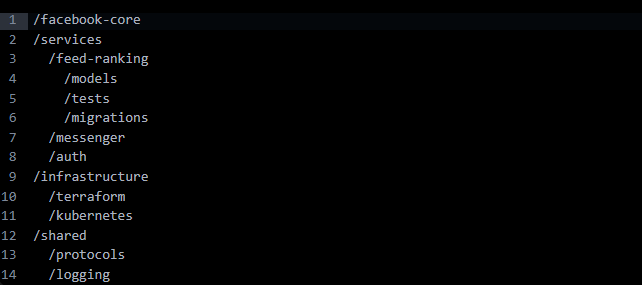
They don't ask AI to "build Facebook." They ask things like : "Write a function that handles message delivery retries with exponential backoff, fits into our existing messenger/delivery module, passes our linting rules, and includes unit tests that mock the Redis client."
Engineers and Devs live in UML diagrams before a single line is written. Teams of people spend days or weeks mapping data flow, not just functions. There are entire studies done on how sockets will work best, they become file descriptors with specific buffer sizes, and they go in with phased plans for when memory heaps fragment to ensure everything has a managed allocation pattern. They can trace a request through seven services in their head without opening an IDE, and have a solution worked out before they ever get back to their computer.
Reading code is the last step. The thinking happens in the math - throughput calculations, latency budgets, failure probabilities. The code is just the implementation detail. I'm not trying to throw shade at someone who uses AI to build a program, but I am trying to explain to the reader (if you made it this far), there is more to "big boy" code than making a wish in a prompt.
The average user sees a blank lot and thinks "I can build anything here." The engineer sees the same lot and knows exactly which permits they need, which utilities are available, and that the foundation has to be poured before the walls go up.
AI is just the construction crew. The engineer is the one who read the blueprints.
3. Integration Literacy Gap. How tools fit into real workflows
This is the missing middle layer. Most people can either use AI as a toy or as a specialist tool, but they can't bridge the two. They don't understand how AI fits into CI/CD pipelines, how it interacts with existing codebases, or how to maintain the systems it helps build.
Vibe coding lives here. It's tool use without workflow literacy. Agentic engineering lives here too - but with the literacy to make it sustainable.
WHY THE CONFUSION PERSISTS
The media ring is feeding on the naive, and they know it. Every new AI release gets a fresh wave of "I built X in 10 minutes" videos, and the comments section fills with people who've never shipped anything asking "so I don't need to learn to code anymore?" The vendors love this. Hype sells compute hours, and compute hours don't care if your app actually works in production.
The education system hasn't had a chance to catch up. We're still teaching coding like it's 2010, while the tools are iterating every six months. By the time a curriculum gets approved, the AI landscape has already changed three times. The gap between demo and production isn't just wide - it's growing with every iteration. Today's vibe coding demo is tomorrow's production nightmare.
This is where Vibe Coding vs Agentic Engineering gets real. Vibe Coding is what happens when you have a tool without literacy - you get demos that look great and fall apart under load. Agentic Engineering is what happens when you have literacy first - you use the same tools, but you know where the guardrails are.
The chasm is getting bigger because the tools are getting more powerful, faster than our ability to teach people how to use them responsibly. We're handing out power tools to people who've never seen a blueprint, and wondering why the house is crooked.
THE HARD REALITY CHECK
AI didn't make software engineering easier. It made it more competitive. The easy wins are automated. The real wins are systems that scale, products that last, architecture that doesn't crumble under load. Tasks that still require the same deep literacy skills that existed before AI was a thought.
The problem you’re seeing is the average person now has access to a tool they thought was a shortcut to six figures. Being able to code used to be the badge that got you in the door. That job is still there, but the entry requirements moved, from plugging in syntax to comprehending, understanding, and iterating on a whole project.
The value of code hasn't dropped because code isn't valuable. It's dropped because our expectations have been raised. What used to be impressive is now table stakes. The market is flooded with demos, and drowned in mediocrity. It is starving for proof of implementation.
If average high schoolers are building things that look like AAA titles or Microsoft projects that used to take a team of 50, the market won't pay someone 6 figures to do that same work. Tools will keep automating the easy stuff, and the bar for standing out will keep climbing.
Agentic engineering is the actual game. These are the people who know hardware stacks cold. They can build you a server farm and optimize code with or without AI. They do power calculations, know your stack from the wall plug to the public port. You aren't replacing that expertise with AI unless you pay for it the same way you'd pay the senior who already has it.
Even then, why not have both and gain that much more of a competitive edge?
THE MOAT PROBLEM
And here's the thing nobody's talking about enough: if we let the frontier build moats around these advanced tools, we lose the literacy war before it starts. When AI lives in the cloud, vendors control the pace, the access, and the narrative. They decide what you can build and what it costs.
Local AI matters because it keeps the frontier democratic. It means you can experiment, learn, and fail without a credit card and a terms-of-service agreement. It means the tools don't get locked behind paywalls and proprietary APIs. The literacy gap closes faster when people can actually touch the tools, break them, and understand them.
The future isn't about who has the best prompts. It's about who understands the system deeply enough to use any tool - cloud or local - with intention. Keep the tools open, keep the learning local, and the moats don't get deep enough to drown us.
Comments 0 in this thread